Thinking critically about one’s work – examining the conditions of its production and reproduction – has become a rare occurrence. With this, I do not mean that we are devoid of rigorous systemic criticism, nor is there a lack of complaining about the current state of the world and where we find ourselves within it. What I have in mind is a different form of reflection, one that turns the question back on oneself: why do I keep doing the work I do, and how, in what way, do I continue doing it? What propels me to invest my energies in my work, and what, in reverse, makes me want to withdraw? What are the conditions within which I create and execute, and how do they impact my concerns, my points of focus, even my operational style in my chosen line of work? And what – if any – is the future of this work?
Questions like these were behind my decision to make a career change late into my PhD, pivoting from an academic lane (and life) to a non-academic one. At its core was the inquiry regarding my work’s purpose in relation to the public: what did it mean to be a knowledge worker – and if I may, without sounding self-important, an intellectual – within the conditions of 21st century academia? What was the meaning of this role in society and in relation to the public good? I find myself asking these same questions now as a culture worker, within the context of art and culture’s continuous and accelerating devaluation, where at best they are treated as a lap poodles, and at worst as enemies of the state.
That is perhaps why A.S. Hamrah feels like a kindred soul. Hamrah is the film critic for n+1 and writes for a number of other publications, including Harper’s, Bookforum, The Nation, The New York Review of Books, Fast Company, The Baffler, and the Criterion Collection. I’ve been following his work since the mid-2010s, but I first got to feel like I was part of the Hamrah Club (hope he doesn’t mind this coinage) when he launched his weekly Last Week in End Times Cinema newsletter in 2024, chronicling for an entire year the revealing pieces of the sad and declining state that the film industry in, from the trivialization of art to the onslaught of AI. The newsletter was a kind of anti-news, going against the co-opted entertainment journalism with its own weapon of short, quick writing. Hamrah is frank, sardonic, indignant, and does not shy away from naming the antagonists – such as Sam Altman, the “eyebrowless” tech CEO, or David Zaslav, the inept legacy studio executive who still made an eight-figure salary despite the wreck he left behind – and they appear in Hamrah’s writing as worse than the comic book villains they banked their production strategy on. Reading Hamrah is a joy. He is the rare critic who explicitly rejects to play by the rules of the entertainment industry, and his writing is ever stronger and more interesting for it. However, he is also a thinker of l’economie politique, not only of the film industry but also of film criticism, where making a living, even being employed in this line of work is a reality of what feels like the distant 20th century. Knowing this, he follows the truth he sees in art and writing, reminding his reader to do the same, as it’s the only thing we can do for ourselves if we are to find meaning in what we do.
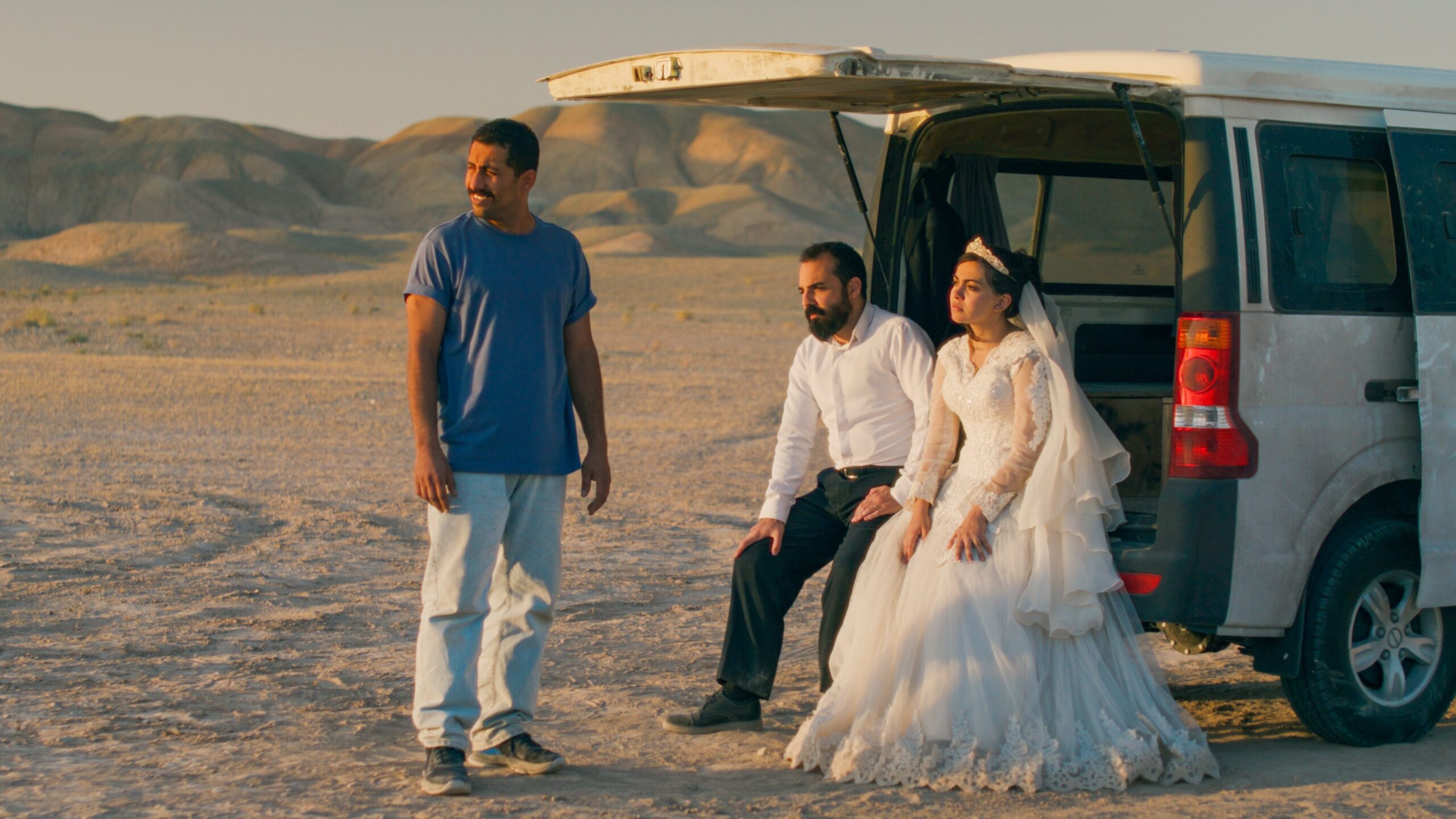
On February 5, we host A.S. Hamrah for a discussion of his two new books – Last Week in End Times Cinema (Semiotexte), the collection of his newsletter, and Algorithm of the Night: Film Writing, 2019-2025 (n + 1) – after the screening of Jafar Panahi’s Cannes-winning It Was Just an Accident, the latest work by a filmmaker who, for me, in the domain of cinema, symbolizes bravery and creativity in the face of oppression and cowardice. Our conversation will also include Josh Sperling, Assistant Professor of Cinema and Media and Creative Media Director for Arts and Sciences at Oberlin College, whose review of Hamrah’s books will be published in the Cleveland Review of Books, our partner for the event. Get your books at Mac’s Backs before the event if you’d like to read ahead, or you can get them in our lobby before/after the screening. We will also screen Panahi’s The Circle as Hamrah’s pick for the night.
Before I close, one last thing, as I linger with thoughts on film writing: Would you be interested in a Cinematheque Book Club, where we engage with works on cinema through screenings and discussions? Let me know by emailing us. As always, with my heartfelt wish and hope: see you at the movies.
Bilgesu Sisman, Director of Cinematheque